
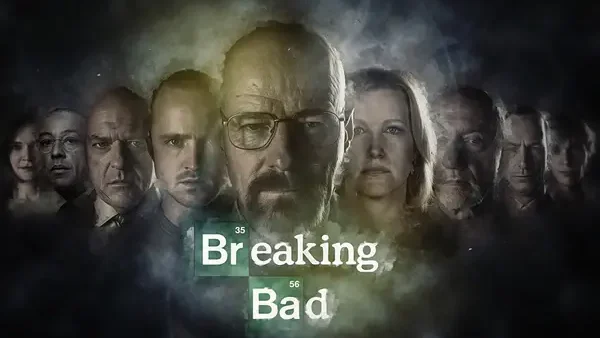
Breaking Bad: A Modern Television Masterpiece
There are television shows that entertain, and then there are television shows that redefine the medium. Breaking Bad belongs firmly in the latter category. From its quiet, deliberate beginnings to its thunderous and emotionally devastating conclusion, the series represents a rare kind of storytelling achievement — one that not only sustains excellence but intensifies it with each passing season.
Created by Vince Gilligan, Breaking Bad first appears deceptively simple: a dying man turns to crime to secure his family’s future. But what unfolds is far more complex than a crime drama. It becomes a meticulous character study, a meditation on ego and power, and a slow-burning tragedy disguised as a thriller.
What makes the series extraordinary is its consistency. Many shows experience fluctuations in quality — strong openings followed by decline, or uneven seasons punctuated by standout moments. Breaking Bad, however, grows sharper and more confident as it progresses. Each season expands the moral and psychological scope of the narrative. Stakes rise not through spectacle alone, but through consequence. Every action matters. Every decision reverberates.
At the heart of the show lies transformation. Not transformation in the traditional heroic sense, but a corrosion of morality so gradual and believable that viewers often fail to notice how far the protagonist has fallen until it is too late. The brilliance of the series lies in this subtle erosion. It does not rush character development, nor does it rely on sudden twists to generate shock. Instead, it builds tension patiently, allowing the weight of choices to accumulate.
The technical craftsmanship matches the writing. The cinematography transforms the New Mexico desert into a character of its own — vast, isolating, and unforgiving. The performances are so immersive that they dissolve the boundary between actor and character. Moments of silence often speak louder than dialogue. The show understands restraint, and in that restraint, it finds power.
Perhaps most impressive is the show’s tonal precision. It balances humor with dread, intimacy with violence, and stillness with explosive intensity. Every climactic moment feels earned because the groundwork has been meticulously laid. Nothing feels accidental.
If there were ever a series that could be argued as near-perfect in execution, Breaking Bad would be among the strongest contenders. Not because it lacks minor flaws, but because its narrative ambition, character complexity, and technical mastery align so seamlessly. It is more than a story about crime. It is a story about pride, identity, masculinity, control, and the dangerous human desire to feel significant.
And once it begins, it rarely loosens its grip.
The Premise & Narrative Foundation
The foundation of Breaking Bad is deceptively straightforward. Walter White is a high school chemistry teacher in Albuquerque, New Mexico. Overqualified and underappreciated, he supplements his income by working at a car wash. His life is defined by quiet disappointment — former colleagues have become wealthy through a company he once helped found, while he remains financially strained and professionally stagnant.
When Walter is diagnosed with terminal lung cancer, his world fractures. Faced with his mortality and the fear of leaving his family in debt, he makes a radical decision. Using his expertise in chemistry, he partners with former student Jesse Pinkman to manufacture and sell high-quality methamphetamine.
At first glance, this is a survival story. A man doing something morally questionable to provide for his wife and children. But almost immediately, the narrative signals that this is not merely about desperation. It is about pride.
The early episodes focus on logistics: learning the drug trade, evading law enforcement, navigating criminal networks. Yet beneath the surface, a deeper story unfolds. Walter is not simply reacting to circumstance — he is discovering something intoxicating: power. The respect he never received in his professional life begins to emerge in the criminal world.
Season One operates deliberately, emphasizing character psychology over complex plot threads. It is intimate rather than sprawling. This slower pace establishes the emotional and moral baseline of the series. We witness the first lies, the first manipulations, the first moments where survival blurs into ambition.
The brilliance of the premise lies in its clarity. A man with nothing to lose chooses to become dangerous. But as the story progresses, it becomes increasingly evident that Walter had far more to lose than he realized — and that his motivations extend beyond family security.
The narrative foundation is simple. The consequences are anything but.


Walter White: The Anatomy of Transformation
Few characters in television history undergo a transformation as complete and disturbing as Walter White. His evolution is not defined by sudden villainy, but by incremental moral compromise.
At the beginning of the series, Walter appears sympathetic. He is intelligent but undervalued, proud but restrained, resentful but passive. Years of perceived failure have left him bitter. His cancer diagnosis does not create this bitterness — it liberates it.
The early turning point comes with his first kill. Faced with imminent threat, Walter chooses survival. The act is traumatic, but it establishes a pattern: when cornered, he rationalizes the unthinkable. Each subsequent moral boundary becomes easier to cross.
As the seasons progress, Walter sheds hesitation. The persona of “Heisenberg” emerges — calculated, controlled, and commanding. He adopts a new posture, a new tone of voice, even a new wardrobe. These external changes mirror internal transformation. He is no longer reacting; he is orchestrating.
One of the most chilling aspects of Walter’s character is his self-deception. He repeatedly insists that his actions are for his family. Yet his choices increasingly endanger them. His need for recognition and dominance overtakes his stated mission. The empire he builds becomes an extension of his wounded pride.
The iconic declaration — “I am the one who knocks” — marks a psychological shift. Walter no longer sees himself as vulnerable. He sees himself as the threat.
Bryan Cranston’s portrayal elevates this transformation to extraordinary levels. Bryan Cranston captures subtle shifts in confidence, cruelty, and calculation with precision. A slight tightening of the jaw or a prolonged stare conveys volumes. The performance ensures that Walter remains human even at his most monstrous.
Importantly, Walter is not written as purely evil. He is written as dangerously human. His flaws — ego, insecurity, pride — are recognizable. The difference lies in scale. When given power, those flaws metastasize.
By the final season, Walter stands almost unrecognizable from the man in the pilot episode. Relationships have been destroyed. Innocent lives have been lost. Trust has eroded completely. And yet, in the end, he admits the truth: he did it for himself.
This confession reframes the entire series. What began as a story about providing for family reveals itself as a tragedy of unchecked ego. Walter White’s transformation is not just the descent of a man into crime — it is the exposure of who he always had the potential to become.

Jesse Pinkman: The Emotional Core
If Walter represents moral corrosion, Jesse Pinkman represents emotional consequence.
Introduced as a small-time meth producer and former student of Walter, Jesse initially appears immature and impulsive. However, as the narrative unfolds, he becomes one of the show’s most layered and sympathetic figures.
Unlike Walter, Jesse is not driven by ego. He is driven by a desire for validation and belonging. His partnership with Walter begins as opportunity but evolves into a deeply toxic dynamic. Walter manipulates Jesse repeatedly — exploiting his loyalty, undermining his confidence, and sacrificing his well-being for strategic gain.
Where Walter rationalizes, Jesse feels. Every death weighs on him. Every betrayal leaves scars. His guilt manifests in substance abuse, emotional breakdowns, and self-loathing. He struggles with the morality of their enterprise in ways Walter increasingly refuses to.
Aaron Paul delivers a performance of remarkable vulnerability. Aaron Paul portrays Jesse with raw emotional intensity. His breakdowns feel painfully authentic, and his quieter moments — filled with shame and confusion — reveal a depth that transforms Jesse from comic relief into tragic figure.
Jesse’s suffering humanizes the story. Through him, the audience feels the collateral damage of Walter’s ambition. Children harmed by the drug trade, innocent lives shattered — these are not abstract consequences for Jesse. They are personal burdens.
By the end of the series, Jesse emerges not as victorious, but as emotionally exhausted. His journey is not one of empowerment, but survival. In many ways, he is the moral barometer of the show. As Walter grows colder, Jesse grows more broken.
Their dynamic is one of the most compelling relationships in modern television — mentor and student, partner and pawn, father figure and abuser. It is tragic, complex, and unforgettable.

Skyler White: The Cost of Proximity
Often misunderstood yet crucial to the narrative, Skyler White represents the domestic fallout of Walter’s transformation.
Skyler begins as a supportive spouse navigating financial strain and pregnancy. However, as Walter’s behavior becomes increasingly secretive and erratic, suspicion grows. When she eventually learns the truth, her world collapses.
Unlike Walter, Skyler does not choose criminality — she is forced into complicity. Her involvement in laundering money through the car wash business places her in constant moral distress. She operates from fear rather than ambition.
The audience’s initial hostility toward Skyler during the show’s early run reveals an interesting bias. Many viewers aligned themselves with Walter’s perspective, perceiving Skyler as an obstacle rather than a victim. Yet, objectively, she is reacting rationally to deception and danger.
Her marriage becomes a battlefield. Trust disintegrates. Intimacy vanishes. What remains is tension and survival. Skyler’s emotional deterioration mirrors the collapse of the family structure Walter claims to protect.
Through Skyler, the series demonstrates that crime does not exist in isolation. It seeps into domestic life, contaminating relationships and eroding stability.
She is not merely a supporting character. She is a reminder that Walter’s empire is built not only on blood and methamphetamine — but on the destruction of his own home.

Antagonists & Power Structures
One of the defining strengths of Breaking Bad lies in its antagonists. They are not merely obstacles for Walter White; they are reflections of him, each embodying a different philosophy of power, control, and morality.
Foremost among them is Gus Fring. Calm, meticulous, and eerily composed, Gus represents the version of criminal success Walter aspires to become. Unlike Walter’s emotionally driven decisions, Gus operates with discipline and long-term strategy. He hides ruthlessness behind professionalism, maintaining a legitimate business facade while orchestrating a vast drug empire. His quiet intensity makes him more intimidating than overtly violent figures. In many ways, Gus is Walter’s mirror — proof that intellect and patience can build empires, but also that pride can destroy them.
On the opposite end of the moral spectrum stands Hank Schrader. A DEA agent and Walter’s brother-in-law, Hank represents law, order, and moral conviction. Yet even Hank is not simplistic. His bravado masks insecurity, and his obsession with capturing “Heisenberg” becomes personal long before he realizes he has been sitting across the dinner table from his target. The tragic irony of Hank’s pursuit intensifies the show’s emotional weight. He is not a flawless hero — he is human, persistent, and ultimately doomed by his integrity.
Then there is Saul Goodman, the morally flexible lawyer who bridges the gap between crime and comedy. Saul introduces levity, but beneath his humor lies a sharp understanding of survival. He adapts to power rather than challenging it. Through Saul, the show explores opportunism — the ability to thrive in moral gray areas without seeking dominance.
Each antagonist forces Walter to confront a different version of himself: the disciplined kingpin, the righteous pursuer, and the adaptable survivor. Together, they construct a power structure that constantly pressures Walter, pushing him toward greater extremes.
Themes & Symbolism
Beneath its crime narrative, Breaking Bad operates as a layered thematic study. At its core lies the destructive nature of pride. Walter’s descent is not fueled solely by financial desperation, but by wounded ego. His need to feel respected, significant, and powerful drives nearly every catastrophic decision he makes.
The series also explores masculinity in crisis. Walter’s early humiliation — professional stagnation, financial inadequacy, and perceived loss of authority — creates a vacuum he fills with dominance in the criminal world. His transformation into “Heisenberg” becomes a performance of hyper-masculinity: assertive, feared, and uncontested.
Capitalism and the corrupted American Dream subtly frame the narrative. Walter is a brilliant chemist who failed to profit from his early success. Watching others build wealth from what he helped create deepens his resentment. The drug empire becomes a twisted entrepreneurial venture — a reclamation of economic power through illegality.
Moral relativism is another key theme. The show repeatedly challenges viewers to question their own alignment. Why do we sympathize with Walter even as his actions grow monstrous? The slow pacing and intimate perspective encourage identification before moral distance sets in.
Symbolism enhances these themes. The New Mexico desert functions as an existential landscape — vast, isolating, and unforgiving. It becomes a place where identities dissolve and decisions echo without societal structure.
Color symbolism is used with precision. Green often signals greed and ambition. Purple subtly surrounds characters seeking control or stability. Black increasingly dominates Walter’s wardrobe as he fully embraces his darker persona.
Even chemistry operates metaphorically. Reactions, transformations, and catalysts mirror human behavior. Walter often explains that chemistry is about change — and the show embodies that principle in narrative form.
Ultimately, Breaking Bad is less about methamphetamine than it is about transformation — how ordinary flaws, when amplified by power, can become catastrophic.
Cinematography, Direction & Technical Craft
Technically, Breaking Bad demonstrates a level of craftsmanship rarely seen in television. The cinematography transforms simple settings into visually striking compositions. Wide desert shots emphasize isolation, while tight close-ups capture paranoia and moral suffocation.
The camera placement is often inventive. Shots from inside objects — barrels, car trunks, laboratory equipment — create a voyeuristic intimacy. These angles are not stylistic gimmicks; they heighten immersion and tension.
The show’s pacing is equally deliberate. Silence is frequently used as a tool. Long pauses allow emotional weight to settle before dialogue resumes. This restraint amplifies impact when violence or confrontation erupts.
Editing rhythms mirror psychological escalation. Early seasons move methodically, reflecting Walter’s cautious experimentation. Later seasons accelerate, mirroring his growing recklessness and ambition.
The score avoids melodrama. Instead of overwhelming scenes with music, it often allows environmental sound to dominate — footsteps in the desert, the hum of lab equipment, labored breathing during moments of fear. When music does rise, it intensifies tension rather than dictating emotion.
Performances are supported by precise direction. Subtle facial expressions are given space to resonate. The camera lingers just long enough to force viewers to confront discomfort.
The result is a series that visually and technically rivals high-caliber cinema. Every element — framing, pacing, sound — works in harmony with the narrative’s psychological depth.
Cultural Impact & Legacy
When discussing the evolution of modern television, Breaking Bad stands as one of the defining pillars of the so-called “golden age” of TV drama. It did not simply succeed — it shifted expectations. It demonstrated that serialized television could sustain cinematic quality, psychological depth, and narrative discipline across multiple seasons without losing momentum.
One of its most significant contributions was redefining the antihero. Television had seen morally complex protagonists before, but Walter White’s transformation was uniquely methodical and complete. Viewers were not merely presented with a flawed character; they were guided, step by step, through his moral collapse. This structure forced audiences into uncomfortable complicity. We rooted for him long after he ceased to deserve it. That dynamic influenced countless shows that followed, shaping how writers approached character descent and moral ambiguity.
The series also changed how audiences consumed television. Its popularity surged through streaming platforms, where binge-watching intensified its tension and character arcs. Viewers could witness Walter’s transformation in condensed time, making the progression feel even more seamless and devastating. In many ways, Breaking Bad became one of the earliest examples of how streaming could amplify a show’s cultural footprint beyond its original broadcast run.
Academically, the series became a subject of analysis in film studies, psychology, and cultural discourse. Walter White’s arc is often discussed in conversations about toxic masculinity, late-stage capitalism, and identity crises within modern American society. The show’s exploration of pride, power, and economic frustration resonated deeply in a post-recession era, where financial instability and professional dissatisfaction were widespread anxieties.
Visually and structurally, it set new standards for television production. The meticulous cinematography, symbolic framing, and narrative cohesion encouraged networks and creators to invest in long-form storytelling with artistic ambition. The line between “television” and “cinema” grew increasingly blurred in its wake.
Its cultural reach extended through expansion of its universe. Better Call Saul proved that the world of Albuquerque could sustain equally sophisticated storytelling, focusing on moral erosion through a different lens. Meanwhile, El Camino: A Breaking Bad Movie provided emotional continuation and closure, reinforcing the durability of its characters.
Beyond awards and critical acclaim, the show embedded itself into popular culture. Lines of dialogue became iconic. The image of Walter in his black hat became symbolic of transformation. Even those who have never watched the series recognize the name “Heisenberg.”
Years after its conclusion, Breaking Bad remains part of the benchmark conversation — cited whenever a new drama claims greatness. It did not just entertain audiences; it altered the standards by which television excellence is measured.
Its legacy is not frozen in nostalgia. It is active, structural, and enduring.
Conclusion: The Tragedy, The Ego, and The Legacy
At its core, Breaking Bad is not merely the story of a chemistry teacher who becomes a drug kingpin. It is the story of a man who confuses power with identity, control with respect, and fear with significance. What makes the series extraordinary is not the scale of its criminal empire, but the intimacy of its psychological descent.
Walter White begins as someone many viewers instinctively sympathize with — underpaid, overlooked, quietly resentful. His cancer diagnosis feels like a cruel injustice layered upon an already disappointing life. In those early moments, his decision to enter the drug trade appears almost understandable. He wants security for his family. He wants dignity. He wants to reclaim what he believes the world denied him.
But Breaking Bad is not interested in simple motivations. It carefully dismantles the illusion that Walter is acting solely out of love or necessity. With each season, the cracks widen. The money he earns surpasses what his family could ever reasonably need. Opportunities to walk away present themselves — and he refuses them. The truth slowly surfaces: Walter does not want survival. He wants dominance. He wants recognition. He wants to feel powerful.
That gradual unveiling is what elevates the show from gripping drama to modern tragedy. Walter’s fatal flaw is not his intelligence or his circumstances — it is his pride. Pride drives him to reject help from former colleagues. Pride pushes him to compete with seasoned criminals. Pride blinds him to the emotional devastation he inflicts on those closest to him. And in the end, pride leaves him isolated.
The tragedy of Walter White is not that he becomes evil overnight. It is that he justifies himself every step of the way. Each moral compromise feels incremental. Each decision feels defensible in the moment. And that is precisely what makes his descent so disturbing — it mirrors the subtle ways in which ordinary flaws can escalate when left unchecked.
Yet the show does not end in nihilism. Its final act provides clarity rather than chaos. Walter’s admission that he acted for himself reframes the entire narrative. It strips away the protective narrative he constructed around “family.” For the first time, he speaks honestly about his motives. That confession does not redeem him, but it restores a sense of narrative integrity. The story ends not with moral confusion, but with recognition.
Equally important is the emotional fallout. The damage is irreversible. His marriage collapses beyond repair. His children are left to grapple with the weight of his crimes. Jesse Pinkman, once manipulated and broken, carries scars that will never fully fade. The empire Walter built dissolves almost as quickly as it rose. What remains is consequence.
Few series maintain such unwavering control over tone, pacing, and thematic direction. From its slow-burning first season to its relentless final stretch, Breaking Bad feels meticulously constructed. Every visual choice, every line of dialogue, every character arc contributes to a unified vision. It never feels accidental. It never feels indulgent. Even its quietest moments serve a purpose.
If perfection in storytelling means coherence between character development, thematic depth, performance, and technical craft, then Breaking Bad comes astonishingly close. It respects its audience. It refuses easy resolutions. It demands patience and rewards it with psychological complexity.
What lingers long after the credits roll is not the violence or the spectacle. It is the unsettling realization that Walter White was not a monster born from nowhere. He was an ordinary man whose ego, when empowered, expanded without restraint. That possibility — that under the right pressures and opportunities, transformation can turn corrosive — is what gives the series its lasting power.
Years later, it continues to be cited as one of television’s greatest achievements. Not simply because it was intense. Not simply because it was shocking. But because it was deliberate. Because it trusted character over chaos. Because it understood that the most compelling drama emerges not from explosions, but from decisions.
In the end, Breaking Bad is a story about change — chemical, moral, psychological. It asks whether transformation reveals who we truly are or creates something entirely new. It leaves us with an answer that is both haunting and inevitable.
Walter White wanted to feel alive, to feel powerful, to feel seen.
He succeeded.
And he paid for it.
New Generation love theme O’Romeo….