
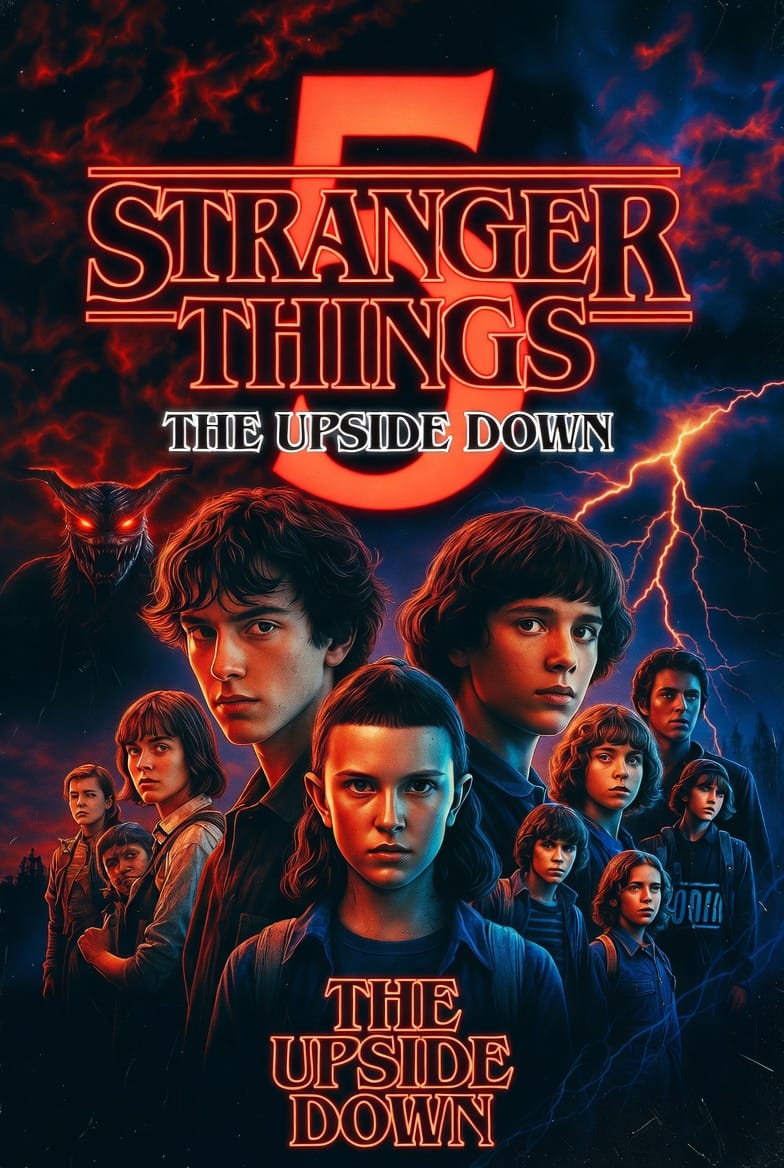
Stranger Things is a gripping blend of supernatural horror, emotional drama, and ’80s nostalgia that feels both thrilling and heartfelt. Set in Hawkins, the show transforms a small-town mystery into an epic battle with the terrifying Upside Down. Its greatest strength lies in its characters, who grow from curious kids into emotionally layered heroes. Eleven’s struggle with identity, Hopper’s redemption, and Max’s trauma arc add real emotional depth. The series balances suspense, humor, friendship, and heartbreak with impressive precision. Visually stunning cinematography and an iconic soundtrack make every season memorable. Though pacing sometimes slows and subplots can feel crowded, the storytelling remains powerful. Overall, Stranger Things stands as one of the most impactful and emotionally resonant modern TV series.
Stranger Things is one of those rare shows that manages to feel nostalgic yet refreshing, emotional yet terrifying, and intimate yet epic. Set in Hawkins, a small American town, the series begins with a missing child and slowly spirals into a massive war between the real world and a sinister alternate dimension called The Upside Down. It’s built like a layered story—what starts as a small mystery evolves into psychological horror, government conspiracy, emotional trauma, and ultimately a battle of destiny.
The magic of Stranger Things lies in its balance. It’s not just a monster story. It’s about friendship, childhood innocence, grief, guilt, identity, courage, and emotional scars. Every season adds a new emotional layer rather than simply repeating threats. The writing treats kids like real characters, not caricatures; they laugh, they fight, they break down, and they grow. Meanwhile, adults like Hopper and Joyce aren’t side characters—they drive the emotional foundation of the show.
🔍 Season-by-Season Deep Dive (Narrative Analysis)
Season 1 – Curiosity, Fear, and Discovery
Season 1 works like a perfect psychological-supernatural thriller. It’s intimate, tense, mysterious, and emotional. Will Byers disappears, Eleven escapes from a lab, and Hawkins’ calmness breaks. The Demogorgon is not just a monster—it represents the unknown, fear of government secrecy, and the terror of losing a child.
What makes this season impactful is its tight screenplay. No episode feels stretched. Every scene builds tension. Friendships feel real and heartfelt. It’s the season that hooks the audience emotionally.
Season 2 – Expansion, Trauma, and Emotional Weight
Season 2 opens the world of the Upside Down, showing that the threat is larger, deeper, and personal. The Mind Flayer represents looming darkness and psychological invasion. Will’s trauma isn’t magically gone—he carries scars, nightmares, and emotional damage. Eleven goes on a journey of self-discovery, questioning identity, belonging, and purpose.
This season strengthens character connections. Relationships deepen, bonds strengthen, and grief becomes a narrative force.
Season 3 – Colorful Surface, Dark Core
Season 3 initially appears bright, fun, and energetic with the Starcourt Mall, humor, romance, and summer vibe. But underneath that colorful surface lies tragedy. The Mind Flayer returns in physical brutal form, leading to horrifying body horror moments. The comedy never feels cheap; instead, it makes the tragedy hit harder.
The season delivers one of the most heartbreaking sacrifices and emotionally destroys the audience right after making them laugh and smile. That contrast is powerful storytelling.
Season 4 – Trauma Becomes a Monster
Season 4 is the series at its darkest and most cinematic. Vecna isn’t just a villain—he represents unresolved trauma, guilt, and emotional pain. Instead of simple jump scares, this season digs psychologically deep. Teenagers suffering silently become victims, making fear feel human and relatable.
Max’s arc is outstanding and heartbreaking. Hopper’s suffering feels raw, brutal, and emotional. Eleven struggles with losing identity and power. The show explores pain honestly rather than hiding it. This season feels like a full-fledged film trilogy packed into episodes.
🎭 Character Depth & Evolution
Stranger Things shines most through its characters. They’re written with love, flaws, and emotional complexity. Steve Harrington transforms from a self-obsessed popular kid into a loyal protector with a heart. Hopper goes from a broken father drowning in grief to a determined protector willing to sacrifice everything. Eleven begins as a “weapon” and becomes a deeply human, emotionally layered individual struggling between love, guilt, and destiny.
Friendships aren’t just “cute kid bonding”; they’re emotional lifelines. Dustin’s warmth keeps the group grounded. Lucas grows from skeptic to emotionally powerful character. Max represents buried trauma and resilience. Will embodies suppressed pain and silent suffering. Joyce is the definition of a fearless mother.
The show treats relationships seriously—whether it’s found family, love, friendship, or parenthood.
🎥 Cinematography, Direction & Music
Visually, Stranger Things is stunning. The lighting, framing, and color palettes shift with tone—dark blues for Upside Down tension, neon colors for Season 3, emotionally heavy muted tones for Season 4. Action scenes feel massive and cinematic, yet emotional scenes are quiet and intimate.
The soundtrack is legendary. The synth score builds tension beautifully. Iconic songs like “Running Up That Hill” and “Master of Puppets” became cultural moments, not just background music. Sound design heightens fear, panic, and emotional beats with precision.
📌 Structured Summary Table
| Season | Emotional Core | Narrative Tone |
|---|---|---|
| S1 | Discovery, fear, friendship | Mystery + Horror |
| S2 | Trauma & belonging | Dark + Emotional |
| S3 | Joy vs Tragedy | Fun + Heartbreak |
| S4 | Psychological pain | Intense + Cinematic |
🧠 Themes & Symbolism (Key Depth Layer)
Stranger Things is about more than monsters.
It explores:
- Childhood vs Evil – innocence fighting darkness
- Trauma – pain never disappears; it shapes destiny
- Found Family – love isn’t always biological
- Power & Responsibility – Eleven’s emotional burden
- Loss & Sacrifice – happiness always costs something
- Identity & Acceptance – especially Will & Eleven
These layers make it emotionally rich instead of being “just a sci-fi show.”
❌ Weaknesses (Honest Critique)
Even great shows aren’t perfect. Stranger Things sometimes suffers from:
- Slow pacing in some episodes
- Too many characters leading to scattered screen time
- Few subplots dragging longer than needed
- Occasional tonal imbalance between humor and horror
But these flaws don’t break the experience; they just slightly stretch it.
🏆 FINAL VERDICT
Stranger Things is a rare series that mixes emotion, terror, nostalgia, and humanity with cinematic storytelling. It makes you care deeply for characters, fear the villains, feel the trauma, and celebrate the victories. It is thrilling, heartbreaking, exciting, terrifying, and beautifully emotional—sometimes all at once.
Rating: 9/10 – A cultural phenomenon with soul, fear, power, and timeless emotional impact.
Pingback: awaraasur.awaraasur.com Duffer Brothers