
Power, Proximity, and the Epstein Question in Hollywood
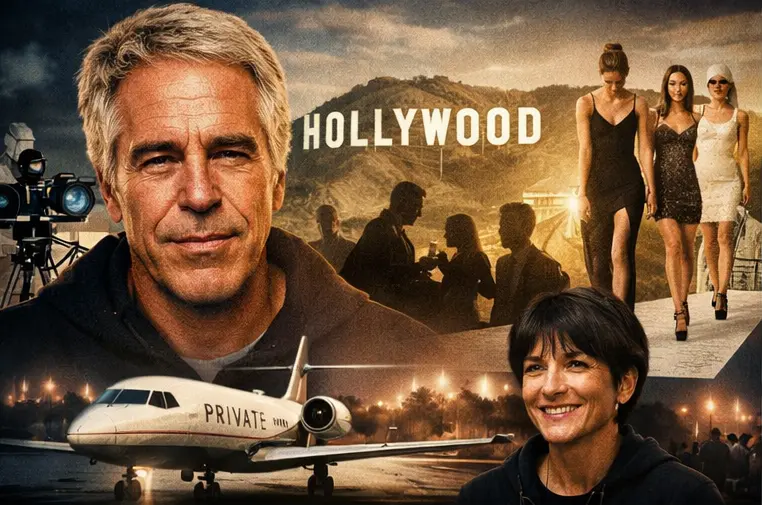
When the so-called “Epstein Files” began to surface in waves—court documents unsealed, depositions revisited, flight logs reanalyzed—the public reaction followed a familiar rhythm. Shock gave way to outrage, outrage to speculation, and speculation to an uneasy fog of half-known names and unanswered questions. In that fog, Hollywood loomed large. Not because the entertainment industry is uniquely corrupt, but because it sits at the intersection of fame, money, aspiration, and silence—conditions in which predatory power has historically thrived.
This series is not an attempt to declare guilt by proximity, nor to sensationalize a tragedy that is, at its core, about survivors. Instead, it is an effort to understand how Jeffrey Epstein—already a convicted sex offender by 2008—remained adjacent to elite cultural institutions, including Hollywood, long after his criminality was a matter of public record. The question is not simply “Who knew Epstein?” but rather: What systems allowed him to be known, tolerated, and even trusted?
Hollywood matters here not because it is a monolith, but because it is a network. Actors, producers, executives, agents, philanthropists, festival organizers, fashion intermediaries, and social fixers all operate within a dense web of reputational exchange. Access is currency. Introductions are power. Silence is often mistaken for professionalism. Epstein understood this ecosystem intuitively. He did not need to be a filmmaker or studio executive to benefit from it; he needed only to be useful—or appear to be.
The documents reveal a man obsessed with proximity to legitimacy. Epstein cultivated the image of a financier with limitless reach, name-dropping celebrities, positioning himself as a behind-the-scenes fixer, and using philanthropy as social armor. In some cases, his claims were exaggerations or outright fabrications. In others, they reflected real social contact—dinners, flights, meetings, donations—none of which, on their own, establish criminal wrongdoing. Yet taken together, they form a troubling pattern: a convicted predator moving comfortably through elite spaces that prize discretion over accountability.
This distinction—between appearance in documents and proof of crime—is central to responsible reporting. A name in a deposition is not an indictment. A flight log is not a confession. Journalists, readers, and institutions alike must resist the urge to collapse complexity into accusation. At the same time, minimizing these connections as meaningless coincidence ignores how power actually functions. Influence is rarely explicit; it is ambient. It operates through who gets invited, who gets warned, who gets protected, and who is ignored.
The #MeToo movement forced Hollywood to confront some of its worst abuses, particularly those embedded in formal power hierarchies like studios and production companies. But Epstein’s case exposes a different vulnerability: the informal economy of prestige. He did not need to employ actresses to exploit them. Instead, he positioned himself near aspiration—modeling agencies, charity galas, festivals, elite social circles—where boundaries are already blurred and gatekeeping is weak.
Equally revealing is the industry’s response—or lack thereof—after Epstein’s arrest and death. While Hollywood reckoned loudly with figures like Harvey Weinstein, the broader Epstein network has been met with relative quiet. This silence may reflect legal caution, fatigue, or genuine uncertainty. But it also raises an uncomfortable possibility: that Epstein’s power was diffuse enough, and his connections normalized enough, that no single institution feels responsible for accounting for its proximity to him.
This series proceeds with restraint, but not neutrality. It takes seriously the harm done to survivors while interrogating the structures that allowed that harm to persist. Each part focuses on a different mechanism—braggadocio, philanthropy, social facilitation, reputational laundering, institutional inertia—to show how Epstein navigated Hollywood without ever needing to belong to it.
The goal is not to deliver verdicts, but to map terrain. To replace rumor with context. To ask how an industry built on storytelling became entangled—however loosely—with one of the most disturbing abuse networks of our time. And finally, to consider what meaningful reform would look like if Hollywood chooses accountability over amnesia.
The “Braggadocio” vs. Reality
One of the most consistent traits attributed to Jeffrey Epstein—by accusers, former associates, journalists, and even law enforcement—was his compulsive name-dropping. The Epstein Files reinforce this portrait again and again: a man who invoked celebrity as a form of currency, using famous names to inflate his stature, intimidate skeptics, and construct a façade of legitimacy around himself. Understanding this habit is a crucial starting point, because it reveals not only who Epstein actually knew, but how he wanted to be perceived—and why that perception worked.
According to multiple testimonies, Epstein routinely claimed intimate access to A-list actors and cultural figures. He allegedly told young women he was on the phone with Leonardo DiCaprio, Cate Blanchett, or Bruce Willis. Sometimes he gestured to his phone mid-conversation. Sometimes he suggested these stars were friends, collaborators, or beneficiaries of his financial wisdom. In most cases, there is no public evidence that these claims reflected real relationships. What matters more is that the claims were believable enough in the moment to serve their purpose.
Epstein understood something fundamental about Hollywood: proximity often matters more than proof. In elite cultural spaces, people rarely demand verification. If someone appears sufficiently connected—invited to the right dinners, photographed in the right rooms, endorsed implicitly by others’ presence—skepticism softens. Epstein weaponized this dynamic. Name-dropping was not idle boasting; it was strategy.
For his victims, this strategy served a darker function. Accusers have described how Epstein’s claims of celebrity connections made him seem untouchable. The implication was subtle but clear: people like me don’t face consequences. When a wealthy man casually references global movie stars, it signals power beyond money—social insulation. For young women, especially those new to elite environments, this aura of protection could feel overwhelming and inescapable.
Yet the Epstein Files also expose the gap between Epstein’s claims and verifiable reality. In many instances, his name-dropping appears aspirational rather than factual. Hollywood figures he invoked were often people he had never met, or had encountered only tangentially at public events. Some may have been aware of him only as a donor or social acquaintance. Others likely had no idea he used their names at all.
This gap—between Epstein’s self-mythology and the documented record—is critical. It complicates simplistic narratives that assume every named celebrity was meaningfully involved. Epstein thrived precisely because he blurred these distinctions. By sprinkling real connections among exaggerated or fabricated ones, he created a fog in which everything sounded plausible.
The files suggest that Epstein’s braggadocio followed a familiar pattern among serial abusers in positions of power. First, establish omnipresence: imply that you are everywhere, connected to everyone who matters. Second, invoke invisibility: suggest that scrutiny does not apply to you. Finally, cultivate dependency: make others believe their opportunities, safety, or advancement are tied—directly or indirectly—to your goodwill.
Hollywood was fertile ground for this approach. It is an industry built on rumors of access: who is attached to which project, who is “circling” whom, who is quietly funding what. In such an environment, unverified claims are not immediately suspect; they are part of the ambient noise. Epstein blended into that noise seamlessly.
Importantly, this does not mean Hollywood figures are responsible for Epstein’s lies simply because he used their names. But it does raise a harder question: why was his performance of legitimacy so rarely challenged? By 2008, Epstein was a convicted sex offender. His plea deal in Florida was public knowledge. And yet, the Epstein Files indicate that even after this point, his reputation as a powerful financier and cultural insider remained largely intact in elite circles.
Part of the answer lies in selective attention. Epstein rarely led with his criminal history. Instead, he foregrounded money, philanthropy, and celebrity adjacency. In a culture that often treats wealth as a proxy for credibility, those signals were enough. Another part lies in plausible deniability. If Epstein mentioned a famous name, listeners could assume there was some basis for it—even if they never asked what that basis was.
The braggadocio also served a defensive function. By constantly aligning himself with admired figures, Epstein diluted suspicion. If someone harbored doubts, they had to reconcile those doubts with an uncomfortable question: Would all these people really associate with him if something were wrong? That question, more often than not, worked in Epstein’s favor.
This is where the distinction between knowing someone and being used by someone becomes morally and analytically essential. The Epstein Files do not prove that the celebrities he name-dropped endorsed him, protected him, or even knew him well. But they do show that Epstein exploited the symbolic power of their names to shield himself from scrutiny and to exert control over others.
There is also a media dimension to this phenomenon. Once Epstein became newsworthy, his habit of invoking celebrities created a feedback loop. Journalists, chasing the gravity of fame, focused heavily on which stars appeared in documents. This focus, while understandable, risked amplifying Epstein’s own narrative—that proximity to Hollywood was the core of his power—rather than interrogating the quieter systems that enabled him.
In reality, Epstein’s true leverage did not come from actors or directors. It came from institutions that conferred legitimacy without asking hard questions: banks, charities, universities, foundations, and social networks that valued discretion above accountability. Hollywood names were part of the costume, not the engine.
Still, costumes matter. Epstein’s braggadocio was not harmless ego. It was a tool that helped him move through spaces where he did not belong, long after he should have been excluded. The tragedy is not just that he lied about who he knew, but that the lie worked—because the culture he moved through rewarded confidence over transparency.
As this series unfolds, the challenge will be to keep these distinctions clear. To separate documented association from self-mythology. To resist both conspiracy and complacency. And to recognize that Epstein’s greatest trick was not convincing people he was powerful—but convincing them that power, once acquired, no longer needed to be questioned.
Philanthropy as a Trojan Horse
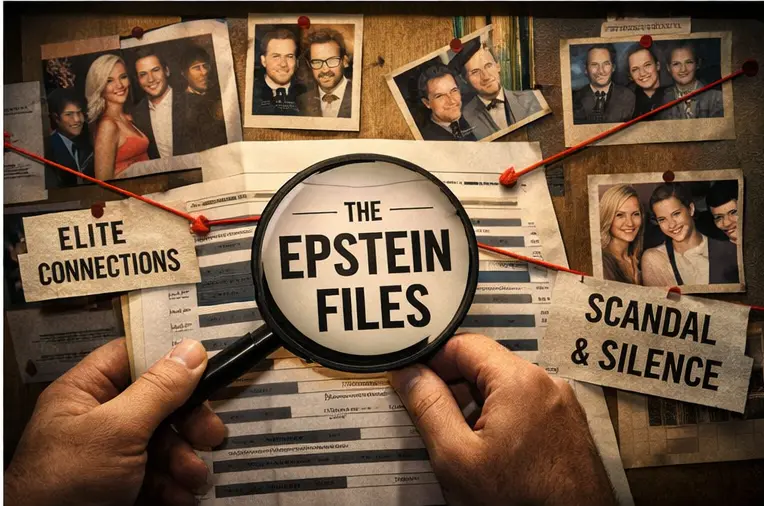
One of Jeffrey Epstein’s most effective—and least scrutinized—strategies was his use of philanthropy as camouflage. Donations, sponsorships, and charitable affiliations functioned as a Trojan horse, allowing a convicted sex offender to pass through institutional gates that would otherwise have remained closed. In Hollywood and its adjacent cultural ecosystems—film festivals, arts foundations, nonprofit boards—this strategy proved especially potent, because philanthropy is often treated not merely as generosity, but as evidence of character.
The Epstein Files reinforce what investigative journalists had long suspected: Epstein did not give indiscriminately. His philanthropy was targeted, strategic, and reputational. He gravitated toward institutions that conferred cultural legitimacy rather than public accountability. Film festivals, arts programs, educational initiatives, and elite charities offered precisely what he needed—prestige without rigorous oversight, proximity to influential figures, and an implicit assumption of moral standing.
In Hollywood, charitable giving is rarely neutral. Donations double as networking tools. Gala tables are bought not just to support causes, but to secure access. Festival sponsorships are pathways into exclusive rooms where deals, alliances, and reputations are quietly shaped. Epstein understood this economy instinctively. By positioning himself as a benefactor, he shifted the terms of engagement: he was no longer someone to be questioned, but someone to be thanked.
This dynamic was particularly powerful because of how philanthropy functions psychologically. When an institution accepts a donation, it enters into a subtle moral contract. Scrutiny becomes awkward. Questions feel impolite. Skepticism risks appearing ungrateful. Epstein exploited this discomfort expertly. His money did not just open doors—it discouraged them from being slammed shut.
The timing of this strategy matters. Epstein’s philanthropic activity intensified during periods when his reputation was most vulnerable, including after his 2008 conviction. Rather than retreating from public life, he recalibrated. He leaned harder into the image of a financier-philanthropist committed to culture, science, and education. In doing so, he reframed himself not as a liability, but as an asset.
For Hollywood-adjacent institutions, this reframing was convenient. Festivals and nonprofits operate under constant financial pressure. Funding is precarious. Donors with deep pockets and few demands are rare. Epstein, by many accounts, presented himself as exactly that: wealthy, discreet, and eager to support “important work.” Due diligence, when it occurred at all, was often superficial.
The Epstein Files suggest that this lack of scrutiny was not simply negligence—it was structural. Many cultural institutions lack formal mechanisms to vet donors beyond basic legal compliance. Background checks are inconsistent. Boards are often composed of the same elite networks from which donors emerge. When red flags appear, they are frequently deferred, rationalized, or quietly ignored in favor of financial stability.
Hollywood’s proximity to these institutions magnified the effect. Film festivals, in particular, operate as liminal spaces—part artistic showcase, part elite social club. They attract actors, producers, agents, journalists, and financiers in a setting designed to blur professional and personal boundaries. Epstein’s presence in such environments did not require him to be central; it required only that he be adjacent. Sitting at the right table, attending the right after-party, being introduced as a “supporter” rather than a scrutinized individual.
Crucially, philanthropy also provided Epstein with narrative insulation. If concerns were raised about his past, defenders could point to his charitable record as counterweight. This is a familiar move in elite scandal management: harm is reframed as contradiction. How could someone who gives so much be capable of something so dark? The question itself becomes a shield.
This logic is flawed, but effective. Philanthropy does not negate harm; it often coexists with it. In Epstein’s case, charitable giving may have actively facilitated abuse by granting him access to young people, aspirational communities, and institutions unwilling to challenge him. Yet the moral halo of philanthropy made this possibility difficult to confront in real time.
There is also a reputational laundering effect at work. When respected institutions accept money, they lend credibility to the donor. That credibility then travels outward. A person who funds a festival becomes, by association, a patron of the arts. A donor to educational programs is recast as a mentor or visionary. Epstein leveraged these associations to soften perceptions of himself across multiple sectors simultaneously.
The Epstein Files do not suggest that Hollywood institutions knowingly colluded with him. But they do reveal a pattern of willful blindness. In an industry quick to champion causes publicly, there was remarkably little appetite for interrogating the sources of private funding. The assumption seemed to be that legal permissibility equaled ethical acceptability—a dangerous equivalence when power disparities are extreme.
This raises uncomfortable questions about responsibility. When an institution accepts money, it also accepts influence, however subtle. If that influence comes from someone with a documented history of abuse, the institution becomes part of a larger system that normalizes his presence. Silence, in this context, is not neutral. It is enabling.
The lesson here extends beyond Epstein. His case exposes a broader vulnerability in how Hollywood and its cultural satellites treat wealth. Money is often assumed to be evidence of competence, intelligence, even virtue. Epstein exploited that assumption relentlessly. His philanthropy was not an act of redemption; it was infrastructure.
Reckoning with this reality requires more than retroactive condemnation. It demands structural change. Transparent donor policies. Mandatory background checks. Clear ethical standards that extend beyond legality. And, perhaps most difficult, a willingness to refuse money—even when refusal is costly.
As long as philanthropy is allowed to function as social armor, figures like Epstein will continue to find cover. The Trojan horse only works because the gates are eager to open.
The Flight Logs and the “Lolita Express”
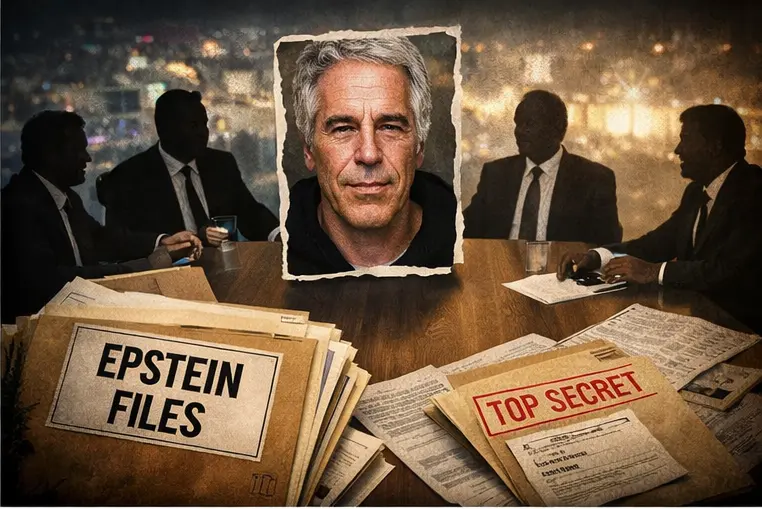
Few artifacts associated with Jeffrey Epstein have captured the public imagination as powerfully as his flight logs. Dubbed the “Lolita Express” by the media, Epstein’s private planes became symbols of unchecked privilege—mobile spaces where boundaries dissolved and accountability seemed suspended. When the Epstein Files brought renewed attention to these records, they did more than list destinations and dates. They mapped a geography of access, proximity, and ambiguity that continues to trouble Hollywood and the broader public.
Flight logs feel definitive in a way testimony often does not. They are tangible, bureaucratic, seemingly objective. A name on a manifest appears to answer a question: Was this person there or not? But the reality is more complex. The logs document travel, not behavior. Presence, not participation. And yet, dismissing them entirely as meaningless would ignore how Epstein used mobility as a form of power.
The files place several entertainers—including Kevin Spacey, Chris Tucker, and Michael Jackson—in Epstein’s orbit at various times, either through recorded travel or documented visits to his properties. In each case, the available records establish proximity, not criminal conduct. This distinction is essential. None of these names, by virtue of appearing in logs or documents, can be presumed guilty of wrongdoing. Still, the pattern of who had access to Epstein’s private world—and how that access was normalized—demands scrutiny.
Epstein’s planes were not merely modes of transportation; they were curated environments. Private air travel collapses distance and erases friction. There are no security lines, no casual witnesses, no institutional oversight. Invitations to fly privately signal trust and status. By offering this privilege, Epstein inverted the power dynamic: he became the gatekeeper. Accepting a seat meant entering his domain.
For Hollywood figures accustomed to first-class treatment, private jets are not inherently suspicious. They are industry standard for high-profile individuals. That normalization is precisely what made Epstein’s planes effective as tools of social integration. Boarding his jet did not feel like crossing a moral threshold; it felt like accepting a convenience.
The Epstein Files suggest that Epstein carefully managed who traveled when, and with whom. Not all flights were the same. Some were populated by scientists, financiers, or politicians. Others involved entertainers or models. The logs reveal overlap, but also segmentation—suggesting a deliberate effort to keep worlds adjacent without fully colliding. This compartmentalization reduced the likelihood that any one passenger would witness the full scope of his activities.
It is also important to note what the logs do not show. They do not document what happened onboard. They do not record who interacted with whom. They do not capture the presence of minors unless explicitly listed, which was not consistently done. The absence of evidence in these areas has allowed defenders to argue that the logs are being overinterpreted. In a narrow legal sense, that argument holds weight.
But ethically, the question is different. Why was a convicted sex offender able to continue hosting influential figures in such intimate settings without sustained scrutiny? Why did repeated associations fail to trigger collective concern, especially after Epstein’s 2008 plea deal?
Part of the answer lies in the diffusion of responsibility. A single flight can be rationalized as an isolated decision. One person’s choice to travel privately with Epstein does not obligate another to interrogate it. In this way, normalization becomes cumulative. Each unchallenged interaction makes the next one easier to justify.
The logs also illuminate the transnational nature of Epstein’s network. Flights between the United States, the Caribbean, and Europe placed Hollywood figures—alongside others—in jurisdictions with varying legal frameworks and media scrutiny. Mobility created opacity. It fragmented accountability across borders, making it harder for patterns to be seen, let alone addressed.
For journalists, the flight logs present an ethical minefield. Publishing names attracts attention, but attention is not the same as understanding. When reporting focuses narrowly on celebrity passengers, it risks reinforcing the idea that Epstein’s power derived primarily from fame, rather than from wealth, institutional access, and systemic failures. At the same time, withholding names entirely can feel like protecting the powerful at the expense of transparency.
The Epstein Files force reporters to walk a narrow path: contextualize without accusing, inform without inflaming. This means explaining why presence matters—socially, symbolically, structurally—without implying criminality where none is proven. It also means resisting the temptation to treat the logs as a list of villains rather than as evidence of how privilege operates.
For Hollywood, the discomfort surrounding the flight logs reflects a deeper anxiety about proximity. The industry is built on relationships, many of them informal and poorly documented. Deals are discussed over dinners, on yachts, in private homes, and yes, on private planes. Epstein’s case exposes the risk inherent in this culture: when access becomes routine, boundaries erode.
None of this absolves Epstein. He designed the system. He curated the spaces. He exploited the trust that private travel confers. But the logs reveal something equally unsettling: how easily powerful people adapt to environments that prioritize comfort over caution.
The enduring fixation on the “Lolita Express” risks obscuring this lesson. The plane was not the crime scene; it was the conduit. The real issue is not who flew where, but how Epstein was able to remain a host at all—how his invitation continued to carry weight long after it should have been revoked.
As this series progresses, the focus will shift further away from spectacle and closer to structure. The flight logs show us the routes. The harder work is understanding the systems that kept those routes open.
The Role of Modeling Agencies
If Epstein’s planes mapped the geography of his access, the modeling world reveals its human infrastructure. The Epstein Files draw renewed attention to his deep and sustained entanglement with modeling agencies, scouts, and fashion-adjacent intermediaries—spaces where youth, ambition, and asymmetrical power converge. These were not incidental connections. They were central to how Epstein recruited, groomed, and insulated himself.
Modeling occupies a uniquely precarious position between aspiration and exploitation. It promises proximity to glamour and wealth while offering little structural protection to those who enter it, especially young women and minors. Unlike unionized acting environments—imperfect as they are—modeling is fragmented, informal, and often transnational. Epstein recognized this vulnerability and embedded himself within it.
The files reference Epstein’s relationships with figures in the modeling industry who functioned as informal talent brokers. Some were agency-affiliated; others operated in gray zones—scouts, “fixers,” or self-styled mentors. Epstein presented himself as a benefactor who could open doors to fashion, film, and high society. For young women chasing visibility, this promise carried immense weight.
Crucially, Epstein did not need formal authority. He rarely positioned himself as an employer. Instead, he adopted the role of connector—someone adjacent to opportunity rather than responsible for it. This ambiguity was strategic. When abuse occurred, lines of accountability blurred. Was he a client? A friend? A patron? The lack of clarity protected him and isolated his victims.
Hollywood’s relationship with modeling intensified the danger. The two industries overlap constantly: models cross into acting; casting directors attend fashion events; agencies manage both careers. Epstein exploited this overlap. By situating himself near modeling pipelines that fed into film and television, he accessed a population primed for transition—and therefore, for risk.
The Epstein Files suggest that some agencies failed to intervene even when warning signs emerged. Complaints were minimized. Rumors were treated as industry noise. In a business where rejection is constant and competition fierce, young women were often reluctant to report concerns for fear of being labeled “difficult.” Epstein benefited from this silence.
This is not to suggest that modeling agencies as a whole were complicit. Many were unaware of the full scope of Epstein’s behavior. But structural incentives discouraged scrutiny. Agencies profit from successful placements, not from slowing processes with uncomfortable questions. Epstein’s wealth and perceived influence made him seem like someone to accommodate rather than challenge.
Another layer of exploitation lay in Epstein’s use of legitimacy by association. When young women were introduced to him through modeling channels, his credibility was pre-established. He was framed not as a stranger, but as a trusted contact. This endorsement—implicit or explicit—lowered defenses. It also shifted responsibility away from Epstein and onto the aspirational individual, who was expected to navigate risk alone.
The fashion industry’s normalization of boundary-crossing further compounded the problem. Long hours, travel, informal settings, and blurred professional-social lines are standard. Epstein inserted himself seamlessly into this culture. His behavior, while extreme, was camouflaged by an environment already desensitized to imbalance.
What emerges from the files is a picture of systemic vulnerability rather than isolated failure. Epstein did not need secrecy; he needed normalization. Modeling agencies provided him with a steady stream of introductions that appeared legitimate on their surface. Each introduction reinforced his status as someone “in the world,” rather than someone to be questioned.
Hollywood’s later reckoning with abuse has largely focused on studio power—producers, directors, executives. The modeling pipeline has received far less sustained attention, despite being a common entry point into entertainment. Epstein’s case underscores why that omission matters. Predation often occurs upstream, before formal contracts and public visibility.
The ethical challenge is complicated by time. Many of these interactions occurred years ago, in an industry that has since undergone partial reform. Yet the patterns persist. Informal recruitment. Unregulated intermediaries. A culture that rewards access over accountability. Epstein was an extreme actor, but he operated within a permissive system.
For survivors, the consequences of this system are lifelong. Being recruited through a modeling channel that failed to protect them adds a layer of institutional betrayal to personal trauma. The Epstein Files do not just document abuse; they document how easily it was facilitated by professional structures that prioritized opportunity over safety.
If Hollywood is serious about reform, it cannot stop at studios and red carpets. It must examine the pipelines that feed it—the agencies, scouts, and informal networks that operate with minimal oversight. Without addressing these entry points, accountability remains incomplete.
Epstein’s legacy within the modeling world is not simply one of individual evil, but of systemic neglect. He exploited the gaps others ignored. The cost of that indifference is now written into the record.
Power Dynamics — Producers and Studio Executives
When discussions about abuse in Hollywood turn to power, they usually settle on a familiar image: the predatory producer, the coercive executive, the studio gatekeeper who trades opportunity for silence. The Epstein Files complicate this picture. They do not place Epstein at the center of studio hierarchies, nor do they present him as a decision-maker in film or television. Instead, they reveal something subtler—and perhaps more unsettling: how power operates even without formal authority, and how institutional leaders can enable that power through indifference, convenience, or strategic blindness.
Epstein did not need to greenlight films or sign actors. His influence functioned laterally, not vertically. He positioned himself near producers and executives as a financier, donor, or social asset—someone who could bring money, introductions, or prestige into their orbit. In an industry where projects are perpetually underfunded and relationships are currency, this was enough.
The files reference interactions between Epstein and individuals who occupied influential positions in studios and production companies. As with other parts of his network, these mentions do not establish criminal behavior. But they do illuminate patterns of access. Epstein was able to move through rooms where decisions were made, not because he belonged there professionally, but because he was tolerated there socially.
This tolerance reflects a broader institutional failure. Producers and executives are not just creative leaders; they are risk managers. They decide which partnerships are acceptable, which reputations are liabilities, and which concerns are worth escalating. That Epstein continued to circulate among them—particularly after his 2008 conviction—raises difficult questions about how risk was assessed, and whose safety mattered.
One explanation lies in compartmentalization. Epstein was rarely introduced as “Jeffrey Epstein, convicted sex offender.” He was introduced as a financier, a philanthropist, a connector. In professional settings, his past could be bracketed as irrelevant, especially if no immediate harm was visible. This narrowing of responsibility allowed individuals to claim ignorance while benefiting from proximity.
Another factor was plausible deniability. Epstein’s role was often informal. He attended dinners, not board meetings. He funded events, not productions. This informality made it easier for executives to distance themselves from him if necessary, while still enjoying the advantages he offered. Power without paperwork is hard to trace—and easy to excuse.
The Epstein Files also suggest that some executives viewed him as an external actor, beyond their purview. If abuse occurred, it was framed as happening “elsewhere”—outside studios, outside sets, outside contracts. This framing ignores a fundamental truth: institutional responsibility does not end at the edge of a soundstage. When powerful figures normalize an individual’s presence, they extend legitimacy beyond formal boundaries.
Hollywood’s post-Weinstein reforms have focused heavily on internal mechanisms: HR policies, reporting channels, codes of conduct. Epstein exposes the limits of this approach. He did not abuse people as a studio executive. He abused them as someone adjacent to power—someone whose presence was quietly accepted by those who did hold institutional authority.
This adjacency mattered. For aspiring actors and models, being told that Epstein was “connected” or “trusted” by producers carried enormous weight. It signaled safety where none existed. Even if executives did not actively facilitate abuse, their failure to challenge Epstein’s legitimacy contributed to an environment in which his claims went untested.
There is also the question of social capital exchange. In Hollywood, relationships are rarely one-sided. Epstein offered access—to money, to elite networks, to exclusive spaces. In return, he received credibility. This exchange did not require explicit agreement. It operated through implication. An invitation extended. A warning withheld. A rumor dismissed.
The files do not show a coordinated effort among producers or executives to protect Epstein. What they show instead is something more pervasive: a culture that treats discomfort as a lesser risk than disruption. Challenging a wealthy, well-connected individual creates friction. Ignoring him preserves flow. In an industry optimized for momentum, the latter often wins.
This dynamic also helps explain why accountability has been uneven. Unlike Weinstein, Epstein was not embedded within a single institution that could be dismantled or reformed. His influence was distributed. That distribution diffused responsibility. Everyone knew a little; no one knew enough—or claimed to.
The ethical failure here is not primarily one of action, but of omission. What would it have looked like for producers or executives to draw a clear line? To refuse association. To alert others. To treat Epstein’s past not as an inconvenience, but as a disqualifier. The files suggest that such clarity was rare.
This is not a call for retroactive blame without evidence. It is a call to recognize how power protects itself through ambiguity. Epstein did not need co-conspirators in studios. He needed only a system that allowed proximity without accountability.
If Hollywood is serious about preventing future abuses, it must expand its understanding of responsibility. Power is not confined to titles. Safety cannot be outsourced to legal departments. And legitimacy should never be granted by default.
Epstein thrived in the margins between institutions—spaces where no one felt fully responsible. Producers and executives did not create those margins, but many chose not to close them. The cost of that choice is now impossible to ignore.
Reputational Risk and the “Guilt by Association” Problem
As the Epstein Files entered public discourse, they triggered a familiar and volatile reaction: the rush to name names. Lists circulated. Screenshots spread. Social media transformed court documents into scorecards. In this environment, appearance itself became incriminating. To be mentioned was to be suspected. To be silent was to be complicit. The result was a moral paradox that continues to haunt coverage of Epstein’s network: how to pursue accountability without collapsing proximity into guilt.
From a legal standpoint, the distinction is clear. Being named in a deposition, a contact list, or a flight log does not constitute evidence of a crime. Courts recognize this. Journalism, however, operates in a different arena—the court of public opinion—where nuance is fragile and reputations are easily destroyed. The Epstein Files sit at the center of this tension.
For Hollywood, the reputational stakes are uniquely high. Careers are built on perception. Trust, marketability, and public favor are inseparable from professional survival. When an actor, producer, or executive appears in Epstein-related documents, the damage can be immediate, even in the absence of any allegation of wrongdoing. This reality has led some to argue that responsible journalism should avoid publishing names altogether.
But erasure carries its own risks. Silence can function as protection. When powerful figures are shielded from scrutiny, patterns remain invisible. Epstein’s ability to exploit elite networks depended precisely on the assumption that proximity would not be questioned. Ignoring names entirely risks replicating that dynamic.
The challenge, then, is not whether to report names, but how. The Epstein Files demand a form of journalism that is both transparent and restrained—one that contextualizes appearances without sensationalizing them. This means explaining why a name appears, what is known, and—equally important—what is not known.
Many media outlets failed this test in the early waves of coverage. Headlines collapsed distinctions. Lists were published without analysis. The implication of guilt was often left hanging, unspoken but unmistakable. In some cases, this approach retraumatized survivors by shifting focus away from systemic failures and toward celebrity scandal.
At the same time, blanket defenses invoking “guilt by association” have been used to shut down legitimate inquiry. The phrase, while important, can become a rhetorical shield—one that discourages any examination of how power circulates. The ethical question is not whether association equals guilt, but whether association reveals something about systems of access, legitimacy, and silence.
The Epstein Files offer an opportunity to refine this conversation. They show that reputational harm is not distributed evenly. Lesser-known individuals are often scrutinized more harshly than those with established power. Meanwhile, institutions—studios, agencies, charities—escape sustained attention altogether. The focus on individual names can obscure collective responsibility.
Journalists face an additional dilemma: the permanence of digital record. Once a name is linked to Epstein online, that association may never fully disappear, regardless of exoneration or context. This raises profound ethical questions about proportionality. Is public interest served by amplifying every tangential connection? Or does doing so simply satisfy a desire for spectacle?
Responsible reporting requires discipline. It requires resisting virality in favor of clarity. It requires stating explicitly when no allegation exists, when a connection is limited, when a claim originates from Epstein’s own unreliable boasting. It also requires acknowledging uncertainty—something media culture often treats as weakness.
For Hollywood figures named in the files, the reputational calculus is brutal. Silence can be interpreted as evasion. Denial can fuel further scrutiny. Engagement risks legitimizing speculation. There is no universally correct response. What matters more is how institutions and journalists frame the narrative around them.
The Epstein Files should not be read as a ledger of villains. They should be read as a map of proximity—one that shows how a convicted abuser navigated elite spaces with minimal resistance. Reputational harm is real and consequential, but so is the harm of pretending that proximity means nothing at all.
Ultimately, the “guilt by association” problem reveals a deeper discomfort: society’s struggle to talk about power without resorting to binaries. Epstein’s network was neither a cabal nor a coincidence. It was a system of overlapping interests, weak oversight, and deferred responsibility.
The task now is not to punish association, but to learn from it. To ask why warning signs were missed. To examine how credibility is conferred. To ensure that the next Epstein cannot hide behind ambiguity while others argue over names.
Justice is not served by speculation. Nor is it served by silence. The ethical path lies between them—narrow, difficult, and necessary.
Strategic Networking and Social Facilitators
Jeffrey Epstein did not build his network alone. The Epstein Files make clear that his access to elite worlds—including Hollywood—was mediated, curated, and normalized by a set of social facilitators. At the center of this system was Ghislaine Maxwell, but she was not the only one. Around Epstein existed a constellation of intermediaries—connectors, introducers, hosts, and validators—whose primary function was to make him appear safe, desirable, and worth knowing.
Maxwell’s role has been extensively documented and legally adjudicated. She was not merely a companion; she was an architect. She translated Epstein’s wealth into social legitimacy, leveraging her own background, accent, and connections to elite institutions. Where Epstein could appear transactional or opaque, Maxwell provided charm, narrative, and reassurance. Together, they formed a complementary operation: money and mystique, power and polish.
The Epstein Files underscore how effective this pairing was. Maxwell functioned as a gatekeeper in reverse—not screening people from Epstein, but screening Epstein for others. She vouched for him. She contextualized his past. She framed his presence as benign, even philanthropic. In elite circles, such vetting carries enormous weight. People trust introductions more than reputations.
But focusing solely on Maxwell risks obscuring a broader phenomenon. Epstein’s network relied on many social facilitators who were not criminals, but enablers. These were people who made introductions, extended invitations, and lent their credibility without fully interrogating what they were endorsing. In Hollywood, where social capital is routinely exchanged, this behavior was normalized.
Social facilitators occupy a peculiar ethical space. They rarely see themselves as responsible for outcomes. Their role is framed as connective, not causal. Yet connections create consequences. When a trusted figure introduces someone as “safe” or “important,” they transfer trust—often without realizing its downstream effects.
The Epstein Files suggest that this transfer of trust was critical to Epstein’s survival in elite spaces. Once vetted by one respected individual, he gained access to others. Each introduction reinforced the last. Over time, Epstein’s presence became self-justifying: If everyone else knows him, he must be fine.
Hollywood’s reliance on informal vetting amplified this effect. Unlike regulated industries with formal compliance mechanisms, entertainment often operates on reputation and referral. Who you know matters more than what is written. Epstein exploited this informality. He did not need institutional approval; he needed social endorsement.
Maxwell’s particular skill was in blending worlds. She bridged finance and culture, Europe and America, old money and new. In doing so, she made Epstein legible to groups that might otherwise have been suspicious. The files indicate that she actively managed his image, steering conversations away from his past and toward his purported interests in science, philanthropy, or mentorship.
This image management had real consequences. For survivors, being introduced to Epstein through a trusted intermediary collapsed their ability to assess risk. The presence of a social facilitator signaled safety. It suggested oversight. In reality, it was the opposite: it was insulation.
The broader lesson here is uncomfortable. Epstein’s power did not stem solely from his wealth or predation. It stemmed from the human tendency to outsource judgment. Social facilitators allowed others to suspend skepticism. Responsibility was diffused across introductions, making it easier for everyone to claim ignorance.
Hollywood’s silence about these facilitators reflects another layer of reluctance. It is easier to condemn a single villain than to examine a network of everyday behaviors. Many of the people who facilitated Epstein’s access did not intend harm. But intention does not erase impact.
The Epstein Files invite a reframing of accountability. Rather than asking only who abused, they ask who enabled proximity. Who vouched. Who reassured. Who chose convenience over caution. These questions are harder to answer, because they implicate norms rather than crimes.
This is not a call for moral purity or retroactive punishment. It is a call for awareness. Social facilitation is powerful. It can protect or expose. In Epstein’s case, it did the former, with devastating results.
If Hollywood is to prevent similar failures, it must interrogate its reliance on informal vetting. Trust should be earned, not inherited. Introductions should come with responsibility. And the phrase “everyone knows him” should no longer function as a substitute for due diligence.
Epstein did not force his way into elite spaces. He was carried in—by people who believed they were merely being social.
Strategic Networking and Social Facilitators

Jeffrey Epstein did not build his network alone. The Epstein Files make clear that his access to elite worlds—including Hollywood—was mediated, curated, and normalized by a set of social facilitators. At the center of this system was Ghislaine Maxwell, but she was not the only one. Around Epstein existed a constellation of intermediaries—connectors, introducers, hosts, and validators—whose primary function was to make him appear safe, desirable, and worth knowing.
Maxwell’s role has been extensively documented and legally adjudicated. She was not merely a companion; she was an architect. She translated Epstein’s wealth into social legitimacy, leveraging her own background, accent, and connections to elite institutions. Where Epstein could appear transactional or opaque, Maxwell provided charm, narrative, and reassurance. Together, they formed a complementary operation: money and mystique, power and polish.
The Epstein Files underscore how effective this pairing was. Maxwell functioned as a gatekeeper in reverse—not screening people from Epstein, but screening Epstein for others. She vouched for him. She contextualized his past. She framed his presence as benign, even philanthropic. In elite circles, such vetting carries enormous weight. People trust introductions more than reputations.
But focusing solely on Maxwell risks obscuring a broader phenomenon. Epstein’s network relied on many social facilitators who were not criminals, but enablers. These were people who made introductions, extended invitations, and lent their credibility without fully interrogating what they were endorsing. In Hollywood, where social capital is routinely exchanged, this behavior was normalized.
Social facilitators occupy a peculiar ethical space. They rarely see themselves as responsible for outcomes. Their role is framed as connective, not causal. Yet connections create consequences. When a trusted figure introduces someone as “safe” or “important,” they transfer trust—often without realizing its downstream effects.
The Epstein Files suggest that this transfer of trust was critical to Epstein’s survival in elite spaces. Once vetted by one respected individual, he gained access to others. Each introduction reinforced the last. Over time, Epstein’s presence became self-justifying: If everyone else knows him, he must be fine.
Hollywood’s reliance on informal vetting amplified this effect. Unlike regulated industries with formal compliance mechanisms, entertainment often operates on reputation and referral. Who you know matters more than what is written. Epstein exploited this informality. He did not need institutional approval; he needed social endorsement.
Maxwell’s particular skill was in blending worlds. She bridged finance and culture, Europe and America, old money and new. In doing so, she made Epstein legible to groups that might otherwise have been suspicious. The files indicate that she actively managed his image, steering conversations away from his past and toward his purported interests in science, philanthropy, or mentorship.
This image management had real consequences. For survivors, being introduced to Epstein through a trusted intermediary collapsed their ability to assess risk. The presence of a social facilitator signaled safety. It suggested oversight. In reality, it was the opposite: it was insulation.
The broader lesson here is uncomfortable. Epstein’s power did not stem solely from his wealth or predation. It stemmed from the human tendency to outsource judgment. Social facilitators allowed others to suspend skepticism. Responsibility was diffused across introductions, making it easier for everyone to claim ignorance.
Hollywood’s silence about these facilitators reflects another layer of reluctance. It is easier to condemn a single villain than to examine a network of everyday behaviors. Many of the people who facilitated Epstein’s access did not intend harm. But intention does not erase impact.
The Epstein Files invite a reframing of accountability. Rather than asking only who abused, they ask who enabled proximity. Who vouched. Who reassured. Who chose convenience over caution. These questions are harder to answer, because they implicate norms rather than crimes.
This is not a call for moral purity or retroactive punishment. It is a call for awareness. Social facilitation is powerful. It can protect or expose. In Epstein’s case, it did the former, with devastating results.
If Hollywood is to prevent similar failures, it must interrogate its reliance on informal vetting. Trust should be earned, not inherited. Introductions should come with responsibility. And the phrase “everyone knows him” should no longer function as a substitute for due diligence.
Epstein did not force his way into elite spaces. He was carried in—by people who believed they were merely being social.
Systemic Reform and Oversight
If the Epstein Files offer anything beyond retrospective horror, it is a blueprint of failure. Not a single failure, but many—distributed across institutions, industries, and habits of thought. Epstein did not exploit a loophole; he exploited a pattern. The final question, then, is not how to condemn the past, but how to prevent its repetition.
Systemic reform begins with abandoning the myth of the “bad individual.” Epstein was an extreme case, but he did not operate in isolation. He moved through systems that rewarded wealth, tolerated ambiguity, and outsourced moral judgment. Any reform that focuses solely on identifying future Epsteins, rather than restructuring the environments that enable them, will fail.
The first and most obvious area of reform is due diligence. Hollywood institutions—studios, agencies, festivals, charities—must adopt donor and partner vetting processes that go beyond legal compliance. A clean criminal record is not enough when credible allegations or prior convictions exist. Ethical review boards, independent of fundraising arms, should be empowered to reject money and associations that pose reputational or safety risks.
This reform must apply retroactively as well as prospectively. Institutions should be willing to audit past relationships, not to assign blame, but to identify vulnerabilities. Transparency about these audits—what was missed, what will change—builds trust more effectively than silence ever could.
Second, Hollywood must confront the informal power economy that Epstein exploited. Too much influence flows through unregulated spaces: private events, social introductions, personal endorsements. While informality will never disappear from a relationship-driven industry, it can be bounded. Clear guidelines about who can represent an institution, make introductions, or vouch for outsiders are essential. With influence must come responsibility.
Third, the modeling and talent pipeline requires urgent attention. As earlier parts of this series showed, abuse often occurs upstream, before individuals enter formal employment structures. Agencies should be held to enforceable safeguarding standards, including mandatory reporting mechanisms, third-party oversight, and clear prohibitions on unvetted intermediaries. Aspiration should not be a liability.
Fourth, Hollywood must expand its understanding of institutional responsibility. Abuse does not have to occur on set to be connected to the industry. When studios, agencies, or festivals normalize individuals who operate in adjacent spaces, they extend legitimacy. A broader conception of accountability—one that includes donors, social facilitators, and partners—is necessary.
Fifth, journalism itself must evolve. The Epstein Files revealed both the power and the peril of exposure. Media outlets must commit to contextual reporting that distinguishes association from allegation while still interrogating systems of access. Sensationalism obscures structure. Silence protects it. The ethical middle ground is demanding, but indispensable.
Survivor-centered reform must also move beyond rhetoric. Support services, compensation mechanisms, and long-term advocacy should not depend on public attention cycles. Epstein’s victims have endured years of legal and social neglect. Any claim of reform that does not materially improve survivor outcomes is incomplete.
Finally, there is the hardest reform of all: cultural humility. Hollywood has long imagined itself as a moral leader, quick to condemn and slow to introspect. The Epstein Files challenge that self-image. They show an industry that spoke loudly about abuse when it could point to a single villain, and quietly retreated when accountability became diffuse.
Reform requires accepting that safety is not guaranteed by good intentions or progressive language. It is built through structure, vigilance, and a willingness to forgo advantage. It requires saying no—to money, to access, to convenience—even when the cost is real.
Epstein’s power was never absolute. It was borrowed, piece by piece, from institutions that failed to ask hard questions. Those institutions now face a choice. They can treat the Epstein Files as an anomaly—an aberration safely sealed in the past. Or they can treat them as a warning.
The difference between those choices is the difference between memory and reform.
If Hollywood wants to ensure that the next Epstein is impossible—not merely illegal—it must rewire the systems that made him plausible in the first place.
Conclusion: Beyond Names, Toward Responsibility
The Epstein Files do not offer the satisfaction of a clean ending. There is no singular revelation that resolves the discomfort they provoke, no definitive list that separates the innocent from the guilty once and for all. What they offer instead is something more unsettling and more useful: a mirror held up to power itself.
Across Hollywood and its adjacent worlds—fashion, philanthropy, media, finance—Epstein functioned less as an anomaly than as a stress test. He revealed how easily wealth substitutes for credibility, how readily proximity is mistaken for proof, and how quickly institutions retreat into silence when accountability becomes diffuse. His story is not primarily about who boarded a plane or attended a dinner. It is about how legitimacy is manufactured and how rarely it is questioned.
One of the most corrosive outcomes of the Epstein discourse has been the fixation on individual names. This fixation is understandable. Names personalize outrage; they make abstract systems feel tangible. But they also risk reproducing Epstein’s own strategy—reducing a complex network of failures into a spectacle of celebrity. When attention narrows to lists, the deeper lessons are lost.
The real indictment of Hollywood is not that some of its figures crossed paths with Epstein. In elite circles, paths cross constantly. The indictment is that those crossings were treated as neutral, unremarkable, or beneath scrutiny—even after Epstein’s criminality was known. That normalcy is the problem. That reflexive deference to money, access, and social proof is the problem.
Equally troubling is the industry’s uneven moral memory. Hollywood found its voice during #MeToo when power could be personified and condemned. With Epstein, power is ambient, structural, and uncomfortable to confront. Silence, in this context, is not neutrality. It is a choice to preserve ambiguity rather than risk self-examination.
The Epstein Files should not be used to retroactively destroy reputations without evidence. Nor should they be quietly archived in the hope that time dulls their impact. They demand a more mature response: one that can hold two truths at once—that association is not guilt, and that association is never meaningless.
At their core, these documents ask a simple but radical question: Who gets to be trusted, and why? Hollywood, like many elite systems, has long answered that question with money, influence, and endorsement. Epstein exploited that answer ruthlessly. Until it changes, reform will remain partial.
The measure of progress will not be how effectively the industry distances itself from Epstein’s name, but how thoroughly it dismantles the conditions that made his presence unremarkable. Transparency over discretion. Due diligence over convenience. Responsibility over reputation.
Epstein is dead. The systems that enabled him are not.
What happens next will determine whether the Epstein Files become a historical footnote—or a turning point.
50 – How a movie unlocks our greatest fear…Why Animal is benchmark for indian cinema…..