
Dhurandhar — An Honest Review
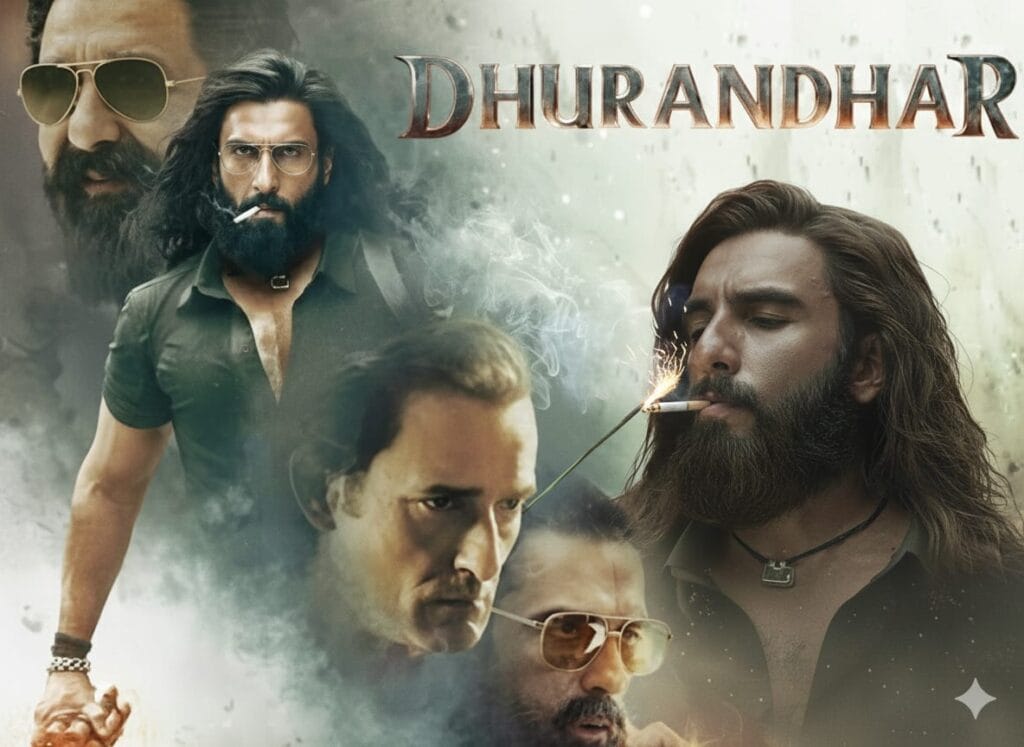
Aditya Dhar’s Dhurandhar arrives not just as another big-budget Hindi thriller, but as a statement about scale, ambition, and the emotional weight that modern Indian cinema is increasingly comfortable carrying. Clocking at an enormous runtime and leaning heavily on atmosphere, politics, history, pain, and adrenaline, the film positions itself somewhere between an espionage epic and a brutal underworld saga. It is loud, meditative, violent, thoughtful, patriotic, messy, and unforgettable — all at once.
Rather than trying to simply “entertain”, Dhurandhar tries to build an experience: a world soaked in fear, mistrust, and psychological warfare, where human beings are shaped and scarred by national events much larger than themselves.
Story and Narrative Approach
The narrative follows Hamza, the protagonist whose identity is layered under secrecy, loyalty, and conflict. Unlike the typical Hindi spy heroes who walk in slow motion and shoot perfectly choreographed bullets, Hamza is complicated. He is emotionally restrained but mentally chaotic. His silence speaks louder than his lines. He doesn’t simply represent patriotism; he represents the burden of patriotism.
The story moves across time, linking historical terror incidents with fictional narrative threads. Rather than treating them as “references,” the film uses these events to explain why India’s intelligence ecosystem carries emotional scars. The narrative is divided into distinct chapters, allowing each segment to breathe. This helps the film build mood and tension without rushing, but also makes the story feel heavy and emotionally dense.
Some viewers will love this layered storytelling. Others will find the same structure demanding. Either way, the film refuses to simplify itself — and that is both its biggest strength and its most debated quality.
Performances — Where the Film Truly Shines
Ranveer Singh as Hamza
Ranveer Singh delivers one of the most controlled and mature performances of his career. Instead of playing to the gallery, he shrinks inward, letting the audience observe his character rather than forcing them to admire him. He conveys exhaustion, guilt, anger, and resilience through body language and stillness. His eyes carry trauma and determination simultaneously.
There are scenes where he says almost nothing, yet the intensity refuses to leave the screen. Hamza is not an easy character to perform — he isn’t flamboyant, isn’t charismatic in the usual Bollywood sense, and doesn’t constantly try to emotionally manipulate the audience. Ranveer deserves credit for trusting silence and restraint.
Akshaye Khanna and The Ensemble
Akshaye Khanna adds intellectual energy and moral gravity to every sequence he appears in. His analytical persona, slightly mysterious demeanor, and calm authority create a powerful counterbalance to Hamza’s inner storm.
Sanjay Dutt, Arjun Rampal, R. Madhavan, and others enhance the narrative without turning the film into a star-showreel. Their characters feel grounded, human, believable, and dangerous. Sara Arjun contributes emotional warmth, offering quieter moments of tenderness in an otherwise dark universe.
The collective performances build a living world rather than a hero-centric fantasy.
Direction — Aditya Dhar’s Vision and Choices
Aditya Dhar chooses not to make a sleek, glossy spy thriller. Instead, he intentionally makes the film feel heavy — morally, emotionally, politically. He wants the viewer to feel the exhaustion of espionage, the dirtiness of underworld alliances, the suffocating air of betrayal, and the burden carried by those working in shadows.
His world-building is extremely meticulous. Streets, safe houses, hideouts, offices — everything feels real instead of designed. Conversations are tense. Violence is sudden and painful, not glamorous. Dhar also allows ambiguity to exist. He does not constantly spoon-feed dialogue explaining motivations. That maturity may frustrate some, but it shows trust in the audience’s intelligence.
However, Dhar also indulges in length and layered storytelling to such a degree that pacing does slow down significantly in parts. The film could have been trimmed without compromising intensity. But clearly, he wanted an epic — not a quick thrill ride.
Themes — What the Film Truly Talks About
Patriotism with Psychological Weight
This is not chest-thumping nationalism. Instead, the film asks:
- What does loyalty cost a person?
- How much must one sacrifice mentally to serve a nation?
- Does patriotism justify everything?
Hamza represents these conflicts. His patriotism is real, but it slowly eats him from the inside.
Revenge and Moral Ambiguity
The film explores the dangerous thin line between justice and vengeance. When nations are hurt, when lives are lost, when history bleeds, who decides what is “right”? The violence in the film never feels celebratory. It feels consequential.
Identity and Disguise
Living between worlds — spy, human, patriot, enemy, friend — fractures identity. The film constantly reminds us that spies don’t just fight enemies; they fight themselves.
Technical Craft — A Massive Strength
Cinematography
Visually, Dhurandhar is stunning in a raw way. It prefers atmospheric realism over visual polish. Shadows dominate frames. Narrow spaces feel suffocating. Broader outdoor visuals show surveillance, distance, and paranoia. The tone remains consistent and never breaks immersion.
Sound & Music
The soundtrack functions less like “songs” and more like emotional architecture. Background score heightens dread, urgency, or stillness depending on circumstances. Gunshots aren’t “stylish sound effects”; they sound violent and disturbing.
Editing and Runtime
Here lies the most debated area.
The chapter-wise narrative is structurally interesting but results in a very long runtime. Some scenes stretch longer than necessary. For many viewers, the second half will test patience. The film is built like a novel, not like a conventional Bollywood thriller, and that makes it demanding cinema.
Those who love slow-burn storytelling will admire it. Those expecting constant speed may struggle.
Sociopolitical Sensitivity and Controversies
Because the film mixes real history with fictional storytelling, it inevitably enters political territory. Some will view it as honest exploration of trauma rooted in national security history. Others may feel it simplifies geopolitics or emotionally leans toward a particular ideological stance.
Representation of Pakistan, terror networks, and cross-border politics is intense and bold. That will invite praise from some audiences and criticism from others. The important thing is — the film does not hide from difficult conversations.
Audience Experience — Why Opinions Are So Divided
One of the most interesting aspects of Dhurandhar is that it creates polar opposite reactions:
People who love it say:
- It is bold.
- It treats the audience like adults.
- It has unforgettable cinematic moments.
- Performances are extraordinary.
- It feels like an event film.
People who don’t enjoy it say:
- It is too long.
- It sometimes becomes emotionally exhausting.
- It occasionally prioritizes heaviness over clarity.
- Certain ideological tones feel uncomfortable.
Both reactions are valid — which itself proves how impactful the film is.
Cultural and Cinematic Impact
Beyond box office numbers, Dhurandhar will be remembered because:
- It changed how Indian spy thrillers can be imagined.
- It showed that mainstream cinema can be deeply psychological.
- It proved audiences are willing to engage with layered cinema.
- It opened conversations about patriotism, politics, and human cost.
It is not “just another hit film”. It is a cultural moment.
Final Verdict
Dhurandhar is not a film you simply “watch”. It is something you experience, absorb, debate, argue about, and remember. It is powerful, imperfect, daring, exhausting, beautiful, brutal, and deeply cinematic.
Strengths
- Outstanding performances
- Rich world-building
- Emotional and political depth
- Strong direction
- Exceptional sound and cinematography
Weaknesses
- Very long runtime
- Slow pacing at times
- Politically and emotionally heavy for some viewers
- Narrative occasionally over-indulgent
Who Should Watch
- People who love intense storytelling
- Fans of serious cinema
- Viewers who enjoy layered, emotionally heavy thrillers
- Anyone who loves performance-driven films
Who May Struggle
- People wanting a simple entertainer
- Viewers who dislike long films
- Audiences uncomfortable with political narratives
⭐ Final Rating (Balanced & Honest)
8.5 / 10 — Ambitious, emotionally powerful, occasionally flawed, but unforgettable cinema.